Lighting a Second Home: How to Create a Warm and Stylish Atmosphere in Every Room
A second home or holiday house is a place apart. Whether it is a seaside retreat, a country house, a mountain chalet or a family home where everyone gathers for the weekend, its interior is often designed with different priorities from a main residence. The focus is on simplicity, relaxation, conviviality and that immediate feeling of getting away from everyday life.
Lighting plays an essential role in creating this atmosphere. It accompanies long summer evenings, brings warmth to winter stays, enhances the materials and architecture of the house, and can transform a terrace into a genuine outdoor living space after sunset.
But how should you choose lighting for a second home? Should you opt for pendant lights, wall lights or portable lamps? Which colour temperature is best? And how can you properly illuminate the living room, kitchen, bedrooms, bathroom and outdoor areas?
Here is our guide to creating elegant, comfortable and functional lighting throughout your holiday home.
Why Is Lighting So Important in a Second Home?
In a second home, lighting should do more than simply provide enough visibility. It contributes directly to the experience and atmosphere of the property.
Unlike a home occupied every day, a holiday house is often associated with moments of relaxation: entertaining friends, cooking together, reading in an armchair, dining outdoors or simply enjoying a peaceful evening.
Lighting should therefore be able to adapt to all these different moments.
One common mistake is trying to illuminate an entire room with a single light source. A powerful central pendant or ceiling light may be practical, but it rarely creates a truly warm atmosphere on its own.
For a comfortable interior, it is better to combine several light sources at different heights.
Pendant lights, wall lights, floor lamps, table lamps and portable lamps can all work together to create a balanced lighting scheme.
The Three Layers of Lighting to Consider
Successful lighting design generally relies on a combination of different types of light.
General Lighting
General lighting provides overall illumination throughout the room.
Depending on the architecture, this can be achieved with a pendant light, ceiling light or several wall lights.
Task Lighting
Task lighting provides additional brightness where specific activities take place, such as cooking, reading, working or getting ready.
A pendant light above a kitchen island or a reading lamp beside an armchair are good examples.
Ambient Lighting
Ambient lighting is what truly gives a room its personality.
A small lamp on a console, a floor lamp in a corner or a wall light providing indirect illumination can completely transform the atmosphere.
In a second home, this layer of lighting is particularly important.
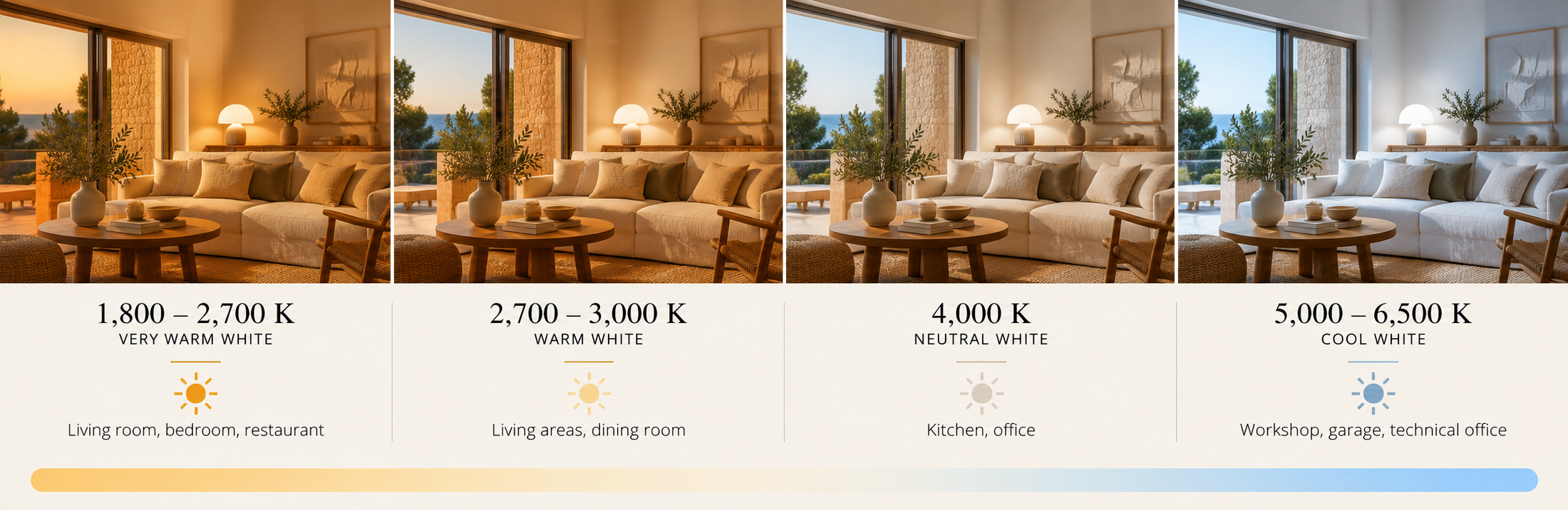
What Colour Temperature Should You Choose for a Holiday Home?
Colour temperature, measured in kelvins, has a significant influence on how an interior feels.
For a second home primarily dedicated to relaxation, warm lighting is generally particularly suitable.
2700K creates a warm and welcoming atmosphere, making it ideal for living rooms, bedrooms and dining areas.
3000K remains warm but feels slightly more dynamic. It can work particularly well in kitchens and other functional spaces.
Cooler colour temperatures are usually less suitable for relaxation areas when the aim is to create a soft, residential atmosphere.
The choice should also reflect the materials and style of the property. Wood, stone, linen and natural colours are particularly beautifully enhanced by warm light.
How to Light the Living Room in a Second Home
The living room is often the heart of a holiday home.
It is where people gather to talk, read, enjoy an aperitif or spend long evenings together. Its lighting therefore needs to be especially versatile.
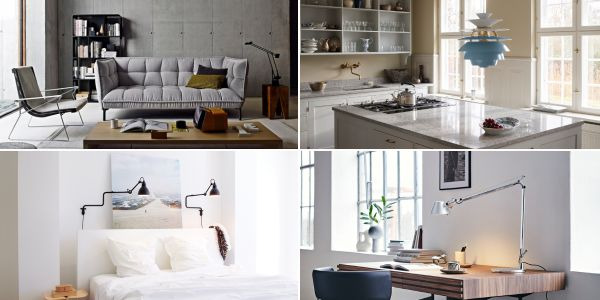
Rather than relying on a single ceiling fixture, combine several light sources.
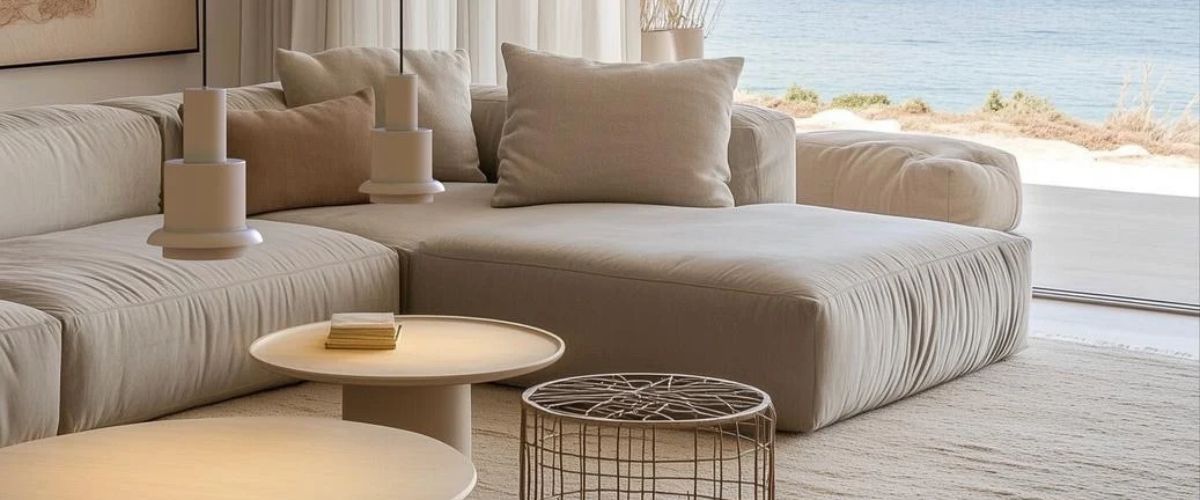
A designer pendant light can structure the room and provide general illumination. It can then be complemented by a floor lamp beside the sofa, a table lamp on a console and a few wall lights.
This combination allows you to completely change the atmosphere depending on the time of day.
In the evening, simply switching off the main light and leaving two or three indirect sources illuminated can create a much more intimate setting.
A Floor Lamp for the Reading Corner
A comfortable armchair positioned near a window can become a genuine reading corner with the right floor lamp.
Choose a model capable of directing light precisely towards a book without unnecessarily illuminating the entire room.
The luminaire then becomes both functional and decorative.
Dining Room: Make the Pendant Light a Focal Point
In a second home, the dining table often occupies a central position.
Long lunches, family gatherings and evenings with friends naturally turn it into one of the most important places in the house.
The pendant light can therefore become one of the room's main decorative features.
A single large pendant works particularly well above a round or square table, while a linear light or a composition of several pendants can complement a long rectangular dining table.
The aim is to provide enough light across the tabletop while maintaining a comfortable atmosphere around the guests.
Dimmable lighting is particularly useful here: brighter during the meal and softer when the evening continues afterwards.
How to Light the Kitchen in a Second Home
Even in a holiday home, the kitchen requires precise and practical lighting.
It is important to distinguish between general lighting and lighting dedicated to food preparation areas.
Above a kitchen island, one or several pendant lights can structure the space while effectively illuminating the worktop.
Areas beneath wall cabinets can benefit from additional discreet lighting.
If the kitchen opens onto the living or dining room, consider creating visual harmony between the different luminaires. They do not need to be identical, but their materials, colours or shapes can echo one another.
Bedroom Lighting: Soft Light for Rest and Relaxation
A bedroom in a second home should immediately feel calm and restful.
Strong overhead lighting alone is rarely enough to create the right atmosphere.
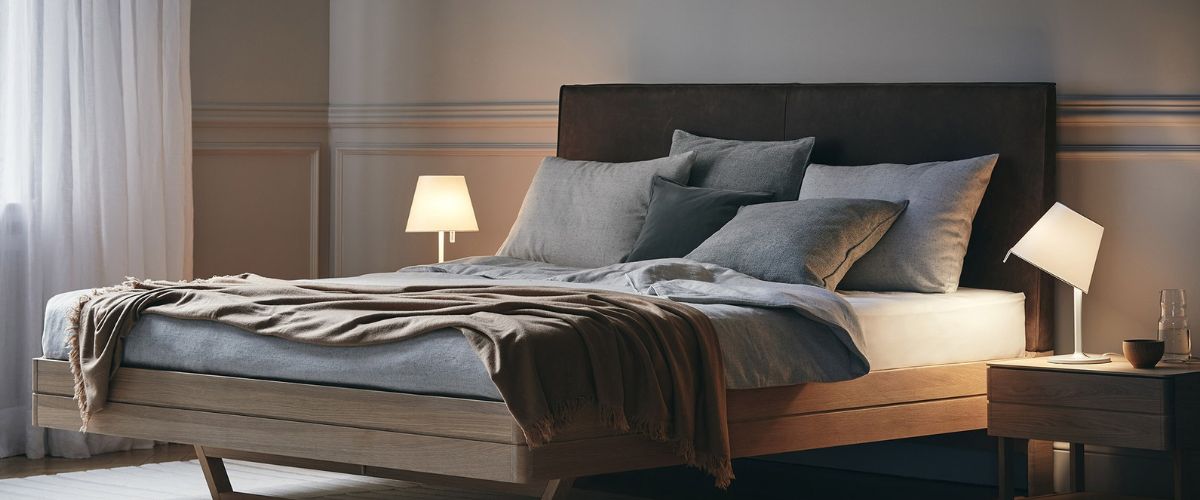
Combine soft general lighting with bedside lamps or reading wall lights.
Wall lights are particularly useful in smaller bedrooms because they free up space on bedside tables while providing precisely directed illumination.
A colour temperature of around 2700K is particularly suitable for bedrooms.
In a guest room, simple and intuitive controls are also important. Visitors should immediately understand how to operate the different lights.
Bathroom Lighting: Combining Atmosphere and Technical Requirements
Bathroom lighting requires particular attention because of the presence of water.
Luminaires should be selected according to their position and must have an appropriate IP rating for the installation area.
Mirror lighting also deserves special consideration. Light coming exclusively from the ceiling can create unwanted shadows across the face.
Light sources positioned around or beside the mirror generally provide more even illumination.
A second, softer lighting layer can also be added to create a more relaxing atmosphere.
Entrance Halls and Corridors: Don't Forget Transitional Spaces
Entrances and hallways are sometimes overlooked when planning the lighting of a second home.
Yet these spaces contribute to the atmosphere from the moment you enter the property.
A series of wall lights can transform a simple corridor into an architectural feature.
In an entrance hall, a sculptural pendant or a table lamp positioned on a console immediately establishes the decorative character of the home.
Lighting can also highlight a photograph, artwork or natural stone wall.
Staircase Lighting: Visibility Without Glare
A staircase should first and foremost be easy and safe to navigate.
Wall lights are particularly effective because they can follow the line of the staircase while creating a decorative composition.
Low-level lighting can also subtly highlight individual steps.
The objective is to provide sufficient visibility without creating uncomfortable glare.
Portable Lamps: An Essential Addition to a Holiday Home
A portable rechargeable lamp is particularly well suited to a second home.
Without requiring additional electrical installation, it can move around the house throughout the day according to your needs.
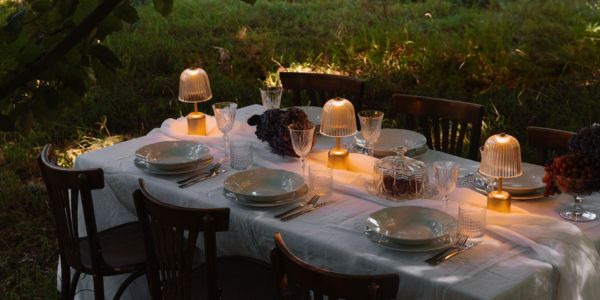
Place it on a coffee table in the living room, on a bedside table, in the veranda or on the terrace during dinner, and it instantly creates an additional point of light.
Rechargeable models offer considerable freedom and make it easy to change the lighting scheme from one season to another.
In a holiday home where rooms may be used differently depending on the season or number of guests, this flexibility is a genuine advantage.
Terrace Lighting: Create a True Outdoor Living Space
In a holiday home, outdoor areas can become just as important as the interior.
Well-designed lighting makes it possible to extend evenings outside while preserving the atmosphere of the setting.
Above an outdoor dining table, a suitable pendant light can create the feeling of a genuine open-air dining room.
Wall lights installed on the façade provide additional illumination, while portable lamps placed on the table create a more intimate atmosphere.
There is no need to make a terrace extremely bright. Several smaller, well-positioned light sources often produce a far more elegant result.
Garden and Outdoor Lighting: Guide Rather Than Illuminate Everything
Outdoor lighting should be approached differently from interior lighting.
The objective is not to illuminate the entire garden.
A few carefully positioned points of light can be enough to reveal the architecture and landscaping.
A bollard light can guide the way along a path.
A wall light can improve visibility around the entrance.
A carefully positioned light directed towards a tree or stone wall can create beautiful patterns of light and shadow.
Lighting then becomes a genuine tool for enhancing the landscape.
For outdoor areas, always select luminaires with an IP rating suited to their exposure to water and weather conditions.
Country House Lighting: Enhance Warm, Natural Materials
In a country house, lighting can highlight the natural materials already present in the architecture.
Old timber, exposed beams, stone, terracotta and linen gain depth and character under warm light.
Luminaires made from metal, glass, paper or natural materials can introduce a contemporary touch without taking away from the original character of the property.
The contrast between traditional architecture and contemporary designer lighting can be particularly striking.
Seaside Home: Keep the Lighting Light and Natural
In a coastal holiday home, the aim is often to preserve the sense of lightness created by natural daylight.
Luminaires with clean lines, opal diffusers and light colours integrate particularly well into this type of interior.
In the evening, warm light maintains a soft atmosphere without creating too sharp a contrast with the natural brightness experienced during the day.
For outdoor installations in exposed coastal environments, materials and protection levels should always be selected according to the actual environmental conditions.
Mountain Chalet: Add Warmth to Large Spaces
In a chalet or mountain home, lighting becomes especially important during long winter evenings.
Using several smaller light sources can make large spaces feel warmer and more intimate.
Floor lamps, table lamps and wall lights providing indirect illumination beautifully enhance timber and textured materials.
A large pendant light can also complement high ceilings and emphasise the architecture of the chalet.
How to Choose Easy-to-Live-With Lighting
A second home should remain simple and enjoyable to use.
For this reason, intuitive and versatile lighting solutions are particularly useful.
Dimmers allow the same luminaire to adapt to several situations.
Portable lamps can avoid the need for additional electrical work.
LED technology can also reduce the frequency of light-source replacement when correctly specified and used.
Finally, investing in a few carefully chosen quality luminaires can often be more effective than multiplying light sources without a coherent overall plan.
Create a Consistent Lighting Theme Throughout the House
Creating a harmonious interior does not mean choosing every luminaire from the same collection.
Mixing different designs can actually give a second home much more personality.
However, it is useful to maintain a common thread.
This might be a material such as brass, black metal or opal glass, a recurring colour, a particular shape or simply a shared design philosophy.
This consistency creates a natural transition from one room to another while allowing each space to retain its own personality.
Lighting Mistakes to Avoid in a Second Home
One of the most common mistakes is trying to make every room too bright.
A welcoming home does not necessarily need to be brightly illuminated. The quality, direction and distribution of light are often more important than brightness alone.
Avoid placing every light source at the same height.
It is also essential to consider how each area will actually be used rather than selecting a luminaire purely for its appearance.
A beautiful designer lamp becomes truly successful when it also provides the right type of light for the space in which it is installed.
Lighting Designed for Holiday Living
Planning the lighting of a second home ultimately means finding the right balance between functionality, simplicity and enjoyment.
A pendant light structures the dining room. A floor lamp transforms an armchair into a reading corner. A wall light guides the way along a staircase. A portable lamp allows dinner on the terrace to continue long after sunset.
Each light source has its own purpose.
By layering these different types of lighting, you can create the warm and welcoming atmosphere that makes a holiday home somewhere you look forward to returning to again and again.
At Lumitop, discover a selection of designer pendant lights, wall lights, floor lamps, table lamps, portable lamps and outdoor lighting to create the perfect lighting scheme for your second home, from the living room all the way to the garden.
FOCUS ON OUR ARTICLES
Designer Cordless Lamps: Portable Lighting for Every Space
Discover why cordless rechargeable lamps have become essential for modern interiors and outdoor living. Explore how to choose the perfect portable designer lamp, understand LED technology, IP ratings and discover premium lighting from Europe’s leading design brands.
Read moreMaison&Objet Paris: The Ultimate Guide to Visiting the Leading Design Trade Show
Maison&Objet brings together the world’s leading brands in decoration, furniture, lighting, and design. Discover everything you need to know about dates, access, badges, exhibitors, trends, and practical tips to make the most of your visit.
Read moreGrammoluce by Martinelli Luce: when light responds to touch
What if light could be shaped by a simple gesture? Designed by Min Dong for Martinelli Luce, Grammoluce turns weight and movement into a poetic lighting experience, blending innovation, material sensitivity and architectural elegance.
Read moreHogar Kubric & Hogar Moucharabieh: when outdoor light becomes architecture
In 2026, Roger Pradier® reinterprets the Hogar collection with Hogar Kubric and Hogar Moucharabieh. Decorative grilles transform light into architectural patterns, enhancing façades and outdoor spaces with graphic lighting effects.
Read morePanthella Portable 160 & 250: Timeless Design in New Chromed Colors
The Panthella Portable by Louis Poulsen returns in two iconic sizes with new opal colors and a refined chrome base. Designed by Verner Panton, these portable lamps combine Scandinavian design heritage, soft glare-free light and contemporary elegance, creating a luminous presence that enhances both indoor and outdoor spaces.
Read morePH 80 Portable – The Iconic Poul Henningsen Lamp Reinvented in a Wireless Design
The PH 80 Portable brings Poul Henningsen’s legendary light into a new era. Rechargeable, dimmable and IP44-rated, it offers soft, glare-free illumination indoors and outdoors. A timeless design icon, now fully mobile.
Read moreIlluminating Your Christmas Table with Elegance: Nomadic Lamps from DCW Éditions Paris
This article provides practical tips and creative ideas for decorating your Christmas table, highlighting nomadic lamps from DCW Éditions Paris. Learn how to use Boucle, IN THE SUN, and Knokke lamps to create a festive and elegant ambiance.
Read moreMost popular categories
The essentials to elevate your interior