Class I, Class II and Class III Lighting: What’s the Difference?
When choosing a light fixture, most people focus on the design, brightness or IP rating. However, another equally important specification is often overlooked: the electrical protection class.
Class I, Class II or Class III – these classifications appear on many lighting products, but their meaning is not always clear.
So, what is the difference between these three protection classes? Which one is best for your home, bathroom, garden or swimming pool? This complete guide explains everything you need to know.
What is the electrical protection class of a light fixture?
The electrical protection class defines how a luminaire protects users against electric shock.
It indicates the safety measures built into the fixture in the event of an electrical fault.
There are three main protection classes:
- Class I
- Class II
- Class III
Each class complies with European safety standards and is designed for specific applications.
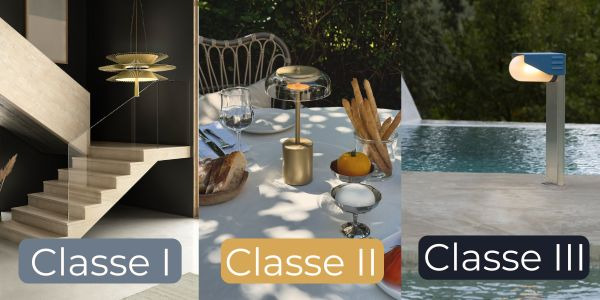
Class I: Protection through grounding
Class I luminaires feature basic insulation combined with a protective earth (ground) connection.
If an electrical fault occurs, the fault current is safely directed to earth, reducing the risk of electric shock.
Installation requires three conductors:
- Live
- Neutral
- Earth (Ground)
The symbol for Class I is the protective earth symbol.
Advantages
- High level of electrical safety.
- Suitable for most residential and commercial installations.
- Standard for conventional electrical systems.
Disadvantages
- Requires a grounded electrical installation.
- Slightly more complex to install.
Where are Class I luminaires used?
Class I fixtures are commonly found in:
- Pendant lights,
- Floor lamps,
- Ceiling lights,
- Some wall lights,
- Industrial lighting.

Class II: Double insulation
Class II luminaires do not require an earth connection.
Instead, protection is provided by double or reinforced insulation, preventing any accessible part from becoming live.
They are identified by the symbol showing one square inside another.
Advantages
- No earth connection required.
- Easy installation.
- Excellent protection against electric shock.
Disadvantages
- Some internal components cannot be repaired.
- Not suitable for every specialist application.
Where are Class II luminaires used?
Class II is widely used for:
- Wall lights,
- Ceiling lights,
- Table lamps,
- Decorative lighting,
- Many outdoor luminaires.
Today, the majority of designer lighting belongs to this protection class.

Class III: Safety through extra-low voltage
Class III luminaires operate exclusively on Safety Extra-Low Voltage (SELV).
Typical operating voltages include:
- 12 V,
- 24 V,
- In some cases, 48 V.
A transformer converts the standard 230 V mains supply into a safe low voltage.
This significantly reduces the risk of electric shock.
The symbol for Class III is the Roman numeral III inside a diamond.
Advantages
- Maximum electrical safety.
- Ideal for wet environments.
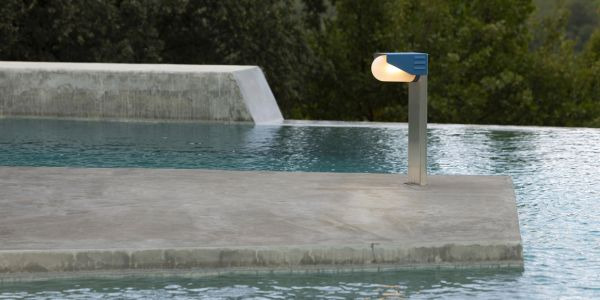
- Recommended around swimming pools.
Disadvantages
- Requires a transformer.
- Installation may be slightly more complex.
Where are Class III luminaires used?
Class III fixtures are particularly suitable for:
- Swimming pools,
- Hot tubs,
- Fountains,
- Wet areas,
- Underwater lighting,
- Gardens near water features.
Comparison table
Protection Class | Earth Connection | Voltage | Safety Level | Typical Applications |
|---|---|---|---|---|
Class I | Yes | 230 V | Very high | Homes, offices, industrial buildings |
Class II | No | 230 V | Very high thanks to double insulation | Indoor and outdoor lighting |
Class III | No | 12 V or 24 V | Maximum safety | Swimming pools, spas, wet environments |
Class I
• Earth connection: Yes
• Voltage: 230 V
• Safety level: Very high
• Typical applications: Homes, offices and industrial buildings.
Class II
• Earth connection: No
• Voltage: 230 V
• Safety level: Very high thanks to double insulation
• Typical applications: Indoor and outdoor lighting.
Class III
• Earth connection: No
• Voltage: 12 V or 24 V
• Safety level: Maximum safety
• Typical applications: Swimming pools, spas and wet environments.

Which protection class should you choose?
The right choice mainly depends on where the luminaire will be installed.
For living rooms and bedrooms
Both Class I and Class II luminaires are suitable.
Today, most decorative lighting products are Class II.
For bathrooms
The appropriate protection class depends on the electrical safety zones defined by local wiring regulations.
Depending on the installation area, Class II or Class III luminaires are often recommended.
For terraces and gardens
The protection class should always be considered alongside the IP rating.
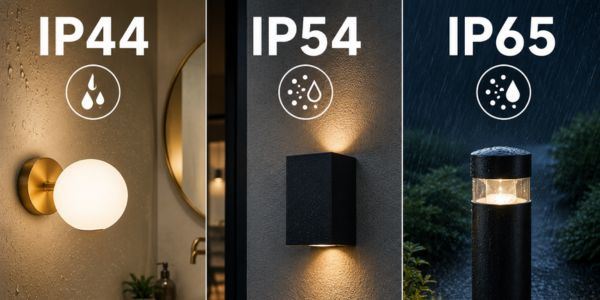
A Class II luminaire with an IP44 or IP65 rating is suitable for many outdoor installations.
Around swimming pools
Safety regulations are much stricter.
In certain zones around a swimming pool, only Class III luminaires are permitted.
This is why many pool lights operate on Safety Extra-Low Voltage (SELV).
Protection class vs. IP rating: What’s the difference?
The electrical protection class and the IP rating describe two completely different characteristics.
The protection class protects people from electric shock.
The IP rating protects the luminaire against dust and water ingress.
For example, a luminaire can be:
- Class II with IP44,
- Class II with IP65,
- Class III with IP68.
Both specifications should always be checked before purchasing a light fixture.

How can you identify a luminaire’s protection class?
You can find this information:
- On the product specification sheet,
- In the installation manual,
- On the product label,
- Directly on the luminaire.
The protection class is always displayed together with its official symbol.
Which protection class is best?
There is no universally “best” protection class.
Each one is designed for a specific purpose:
- Class I is ideal where a protective earth is available.
- Class II is the most common choice for residential and designer lighting thanks to its double insulation.
- Class III provides the highest level of safety for wet environments such as swimming pools and spas.
Always follow the manufacturer’s recommendations and local electrical regulations when selecting and installing lighting.
The electrical protection class of a luminaire is an essential safety feature.
Class I luminaires rely on grounding, Class II fixtures provide protection through double insulation, while Class III luminaires operate on Safety Extra-Low Voltage (SELV) to offer the highest level of protection in sensitive environments.
Before purchasing a light fixture, always check both the protection class and the IP rating to ensure the lighting is perfectly suited to your indoor or outdoor project.
SPOTLIGHT ON OUR ARTICLES
Pool Lighting: Why Choose Class III IP65 Outdoor Luminaires?
Looking for safe and elegant lighting around your swimming pool? Discover why Roger Pradier® Class III IP65 luminaires are the ideal choice. Operating on 12/24V SELV, manufactured in France and backed by a 25-year anti-corrosion warranty, they combine safety, premium design and long-lasting durability. Explore the Tetra, Sherlock and RP195 collections, available on request from Lumitop.
Read moreIP44, IP54 or IP65: How to Choose the Right IP Rating for Your Light Fixture
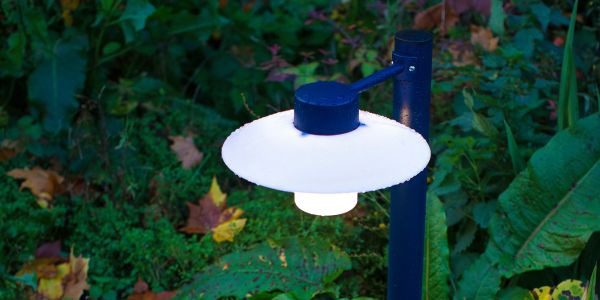
Not sure whether to choose an IP44, IP54 or IP65 light fixture? Discover the differences between these IP ratings, where they should be used indoors and outdoors, and our expert tips for selecting the right lighting for your bathroom, terrace or garden.
Read moreWhich IP to choose for my exterior lighting?
Many criteria must be taken into account in order to make it aesthetically pleasing, functional and often even safe. Among the factors to consider, you must take into account the protection index (IP) of your luminaire. An important standard that provides information on the degree of protection of your luminaire against dust and water.
Read more