What Is the Difference Between IP44, IP54 and IP65? The Complete Guide

What Is the Difference Between IP44, IP54 and IP65? The Complete Guide

Choosing between a light fixture with an IP44, IP54, or IP65 rating? These protection ratings are essential for ensuring the safety, durability, and performance of your lighting, especially in bathrooms, kitchens, gardens, and outdoor spaces.

But what do these numbers actually mean? Which IP rating should you choose for your terrace, bathroom, or outdoor lighting?

Here’s everything you need to know.

What Does an IP Rating Mean?

What Does an IP Rating Mean?

IP (Ingress Protection) is an international standard (IEC 60529) that indicates how well a light fixture is protected against:

  • Solid objects (dust, sand, insects, etc.)
  • Water (rain, splashes, water jets, etc.)

An IP rating always consists of two digits.

Example:

IP65

  • 6 = Protection against dust
  • 5 = Protection against water jets

The higher the number, the greater the level of protection.

What Does the First Digit Mean?

What Does the First Digit Mean?

The first digit indicates protection against solid objects.

Digit

Protection

0

No protection

1 to 4

Protection against progressively larger solid objects

5

Dust protected

6

Dust tight

What Does the Second Digit Mean?

What Does the Second Digit Mean?

The second digit indicates protection against water.

Digit

Protection

0

No protection

1

Dripping water

2

Dripping water at up to 15°

3

Spraying water

4

Splashing water

5

Water jets

6

Powerful water jets

7

Temporary immersion

8

Continuous immersion

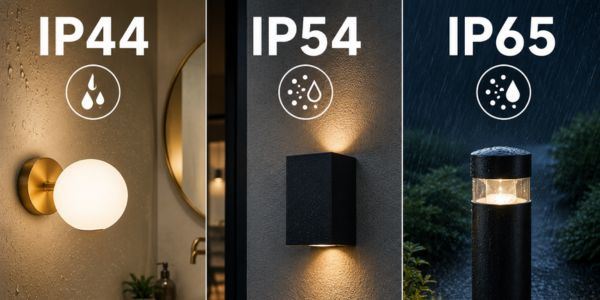
What Does IP44 Mean?

What Does IP44 Mean?

An IP44 rated light is protected against:

✔ Solid objects larger than 1 mm

✔ Water splashes from any direction

This is one of the most common ratings for indoor humid environments.

Where Can IP44 Be Used?

  • Bathrooms (outside shower areas)
  • Toilets
  • Utility rooms
  • Covered terraces
  • Sheltered balconies
  • Covered entrances

IP44 is ideal where occasional water splashes may occur but where the fixture is not exposed to direct water jets.

What Does IP54 Mean?

What Does IP54 Mean?

An IP54 rated luminaire offers improved protection against dust compared to IP44.

It protects against:

✔ Dust (limited ingress)

✔ Water splashes

Where Is IP54 Recommended?

  • Garages
  • Workshops
  • Commercial kitchens
  • Semi-covered terraces
  • Utility and technical rooms

IP54 is particularly suitable for environments where dust is present.

What Does IP65 Mean?

What Does IP65 Mean?

IP65 is one of the most popular protection ratings for premium outdoor lighting.

It provides:

✔ Complete protection against dust

✔ Protection against water jets

An IP65 luminaire can remain outdoors throughout the year.

Where Can IP65 Be Used?

  • Gardens
  • Terraces
  • House façades
  • Pathways
  • Pergolas
  • Outdoor kitchens
  • Hotels
  • Restaurants
  • Commercial outdoor spaces

Many modern portable cordless lamps are IP65 rated, making them perfect for both indoor and outdoor use.

IP44 vs IP54 vs IP65: What’s the Difference?

IP44 vs IP54 vs IP65: What’s the Difference?

Rating

Dust Protection

Water Protection

Typical Applications

IP44

Protection against objects >1 mm

Water splashes

Bathrooms, covered terraces

IP54

Dust protected

Water splashes

Garages, kitchens, terraces

IP65

Dust tight

Water jets

Gardens, façades, outdoor lighting

Which IP Rating Is Best for a Bathroom?

Which IP Rating Is Best for a Bathroom?

It depends on where the light fixture will be installed.

Generally:

  • Around washbasins: IP44 is usually sufficient.
  • Outside direct splash zones: IP44 is suitable in most cases.
  • Near showers or bathtubs, electrical safety zones and local installation regulations must always be respected.

Always follow your country’s electrical installation standards.

Which IP Rating Should You Choose for a Terrace?

Which IP Rating Should You Choose for a Terrace?

For a covered terrace, IP44 or IP54 is generally sufficient.

If the terrace is fully exposed to the weather, IP65 is strongly recommended thanks to its superior protection against rain and moisture.

Should Portable Cordless Lamps Be IP65 Rated?

Should Portable Cordless Lamps Be IP65 Rated?

If you want to use a portable rechargeable lamp both indoors and outdoors, IP65 is the ideal choice.

It provides excellent protection against:

  • Rain
  • Water splashes
  • Dust
  • Insects

Many premium portable lamps from brands such as Nuura, Louis Poulsen, Forestier, and Martinelli Luce feature an IP65 rating, making them ideal for terraces, balconies, gardens, and outdoor dining.

Why Is the IP Rating Important?

Why Is the IP Rating Important?

Choosing the correct IP rating ensures:

  • Better safety
  • Longer product lifespan
  • Protection of electronic components
  • Reliable LED performance
  • Greater durability in challenging environments

Selecting the right protection level helps preserve both the appearance and functionality of your lighting over time.

Conclusion

Conclusion

The IP rating is one of the most important criteria when choosing a lighting fixture.

For humid indoor environments, IP44 is generally sufficient.

If dust protection is also important, IP54 offers additional durability.

For outdoor lighting and portable rechargeable lamps, IP65 is the best solution thanks to its complete dust protection and resistance to water jets.

At Lumitop, you’ll find a wide range of designer lighting with IP44, IP54, and IP65 ratings, perfectly suited for bathrooms, terraces, gardens, hotels, restaurants, and architectural projects.

FAQ – IP44 vs IP54 vs IP65

FAQ – IP44 vs IP54 vs IP65

What is the difference between IP44 and IP65?

IP44 protects against water splashes, while IP65 is completely dust-tight and protected against water jets, making it much better suited for outdoor use.

Can an IP44 light be used outdoors?

Yes, provided it is installed in a sheltered location such as under a roof, canopy, or covered terrace.

Is IP54 suitable for garden lighting?

IP54 is suitable for partially protected outdoor areas. For fully exposed gardens and façades, IP65 is the better choice.

Is an IP65 light waterproof?

Yes. An IP65-rated luminaire is designed to withstand rain and water jets, making it ideal for permanent outdoor installation.

Does an IP rating protect against dust?

Yes. The first digit of the IP rating indicates the level of protection against dust and solid objects.

Which IP rating should I choose for a bathroom?

In most cases, IP44 is sufficient. However, areas close to showers and bathtubs must comply with local electrical installation regulations.

Are portable cordless lamps waterproof?

Many premium cordless lamps feature an IP65 rating, allowing safe use both indoors and outdoors.

What does IP65 mean?

IP65 means the luminaire is completely dust-tight and protected against water jets from any direction, making it an excellent choice for outdoor lighting.

SPOTLIGHT ON OUR ARTICLES

How to Position Wall Lights in a Staircase: The Complete Guide

Wondering where to install wall lights in your staircase? Discover the ideal height, spacing recommendations and expert tips for safe, elegant and perfectly balanced staircase lighting.
Read more

What Height Should You Hang a Pendant Light in a Stairwell?

Planning to install a pendant light in your staircase? Discover the ideal hanging height, essential safety guidelines and expert tips to enhance your stairwell with stylish, well-balanced lighting.

Read more

Can You Use an IP65 Lamp in the Rain? The Complete Guide

Can an IP65 lamp safely stay outside in the rain? Learn what the IP65 rating really means, how it compares to other protection ratings, and how to choose the right outdoor light.

Read more

Can You Leave a Portable Lamp Outdoors?

Portable lamps are perfect for lighting a terrace, garden or balcony. But can they stay outside all year round? Discover the importance of IP ratings, essential care tips and how to choose the right outdoor portable lamp.

Read more

IP44, IP54 or IP65: How to Choose the Right IP Rating for Your Light Fixture

Not sure whether to choose an IP44, IP54 or IP65 light fixture? Discover the differences between these IP ratings, where they should be used indoors and outdoors, and our expert tips for selecting the right lighting for your bathroom, terrace or garden.

Read more
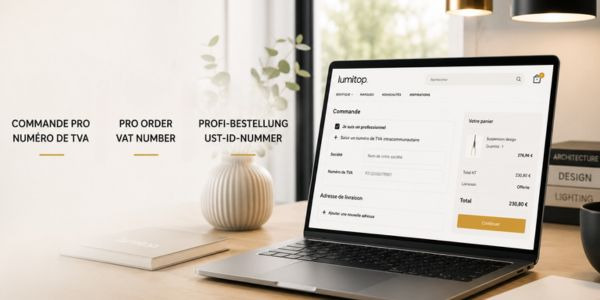
How to Order VAT-Free with an EU VAT Number on Lumitop: Complete Guide

Are you a European business with a valid EU VAT number? Learn how to place your order on Lumitop, benefit from your professional discount and receive VAT-free invoicing with our step-by-step guide.

Read more

How to choose the perfect outdoor wall light for your home? Style, function & durability explained

Choosing the right outdoor wall light is key to enhancing your façade and ensuring safety. Discover how to match style, function, and durability for a perfect exterior lighting setup.

Read more

PH Artichoke by Louis Poulsen: sizes, dimming options and full guide

A true Scandinavian design icon, the PH Artichoke delivers soft, glare-free lighting with a sculptural look. Explore Artichoke Ø48, Ø60, Ø72 and Ø84 cm sizes, dimmable options (DALI, Bluetooth, phase dimming) and key installation tips to choose the perfect version.

Read more

Rumee 220 Portable: Louis Poulsen’s New Sculptural Portable Design Lamp

Soft, sculptural and portable, the Rumee 220 Portable by Gabriel Tan brings warm 360° ambient light wherever you go. With its organic curves and warm 2700K LED, it redefines the modern portable design lamp with Scandinavian elegance.

Read more

Illuminating Your Christmas Table with Elegance: Nomadic Lamps from DCW Éditions Paris

This article provides practical tips and creative ideas for decorating your Christmas table, highlighting nomadic lamps from DCW Éditions Paris. Learn how to use Boucle, IN THE SUN, and Knokke lamps to create a festive and elegant ambiance.  

Read more

Nesso & Nessino Artemide: The Iconic Mushroom Lamps of Italian Design

From the 1960s to today, Artemide’s Nesso and Nessino remain timeless icons. Their mushroom-shaped silhouette, bold design, and unique history continue to fascinate design lovers worldwide.

Read more

Lumen vs Lux: What’s the Difference and How to Choose the Right Lighting

Lumen and lux are often confused, yet both are essential to achieve the right brightness. Learn how to choose lighting for every room.

Read more

Lumens per Room: Create the Perfect Lighting for Your Home

A practical guide to understanding how many lumens each room needs to achieve harmonious, functional, and stylish lighting.

Read more

How to Light Up a Pathway: Elegant & Safe Outdoor Lighting

A well-lit pathway enhances the outdoor space and brings peace of mind after dark. Discover how to create a safe, stylish lighting path for your garden, steps, or entryway — without harsh light or cluttered layout.

Read more

Outdoor Lighting Mistakes That Can Ruin Your Setup

Installing outdoor lights seems simple, but a wrong move can ruin the effect. Learn how to avoid the most common installation mistakes and get a long-lasting, stylish result.

Read more